What’s Coming Next: A Look at MultiPortal 1.2, 1.3 & 1.4

Published On: March 23, 2026 | Categories:  Updates

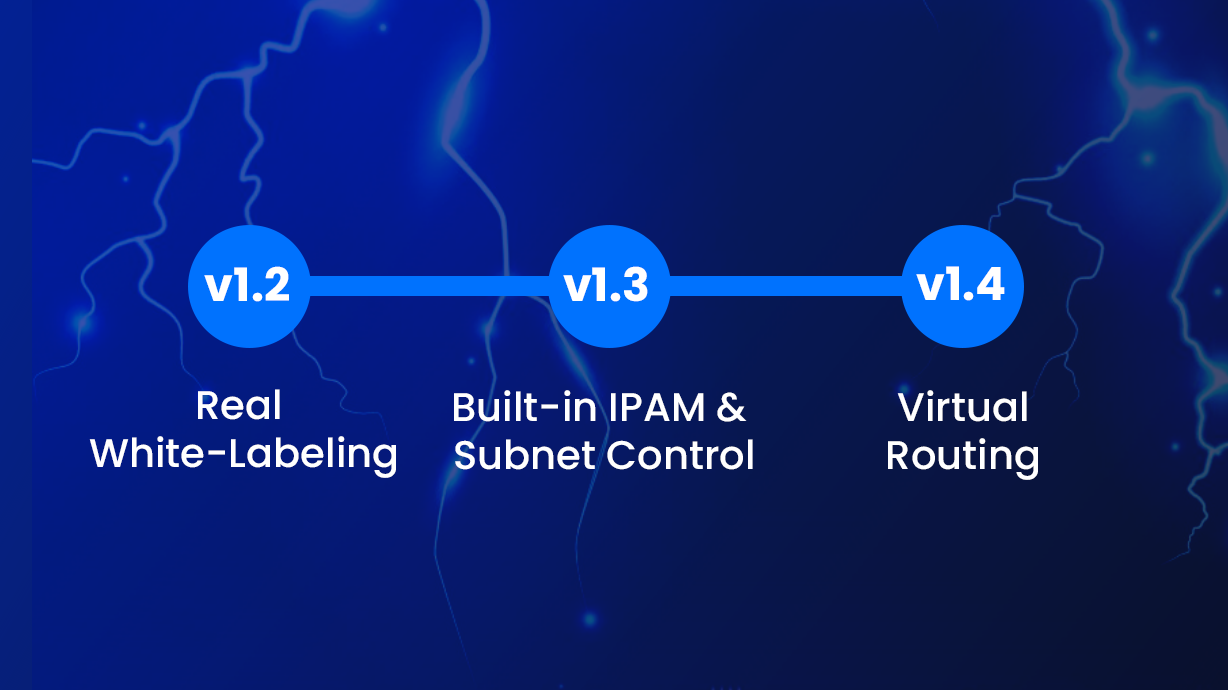
We’ve been heads-down building, and we’re excited to share what’s on the roadmap. From white-labeling to full virtual routing, there’s a lot landing in the next few releases. Consider this a little teaser for what we’ll be presenting at CloudFest 2026 next week. Here’s what you can expect.


Note: The screenshots throughout this post are from early in the development cycle. The UI will be refined and improved before release.

MultiPortal 1.2: Expanded Branding & Reseller Customization

MultiPortal already supports branding with custom logos and that kind of thing. With 1.2, we’re expanding that significantly and bringing resellers into the picture.


Reseller Branding— Resellers will now be able to apply their own custom branding to the interface. Their tenants see their brand, not yours. It’s a clean separation that makes white-labeling actually work the way it should.


Custom CSS, Global or Per-Reseller— Full control over look and feel via custom CSS injection. Apply it globally across your deployment, or scope it per reseller. Want a completely different theme for each reseller? Go for it.

MultiPortal 1.3: Subnet Management & IPAM

Version 1.3 is all about networking foundations. We’re building a proper IPAM system directly into MultiPortal.


Service providers will be able to create public subnets and assign public IP addresses down to their tenants. Tenants can also create their own private subnets, and the system will automatically track IP addresses already in use via VirtIO drivers.


Need to reserve specific addresses? Done. Both service providers and tenants can reserve IPs within their subnets, and those addresses tie directly into advanced CloudInit deployments for more automated VM provisioning.


This is the groundwork for what comes next.

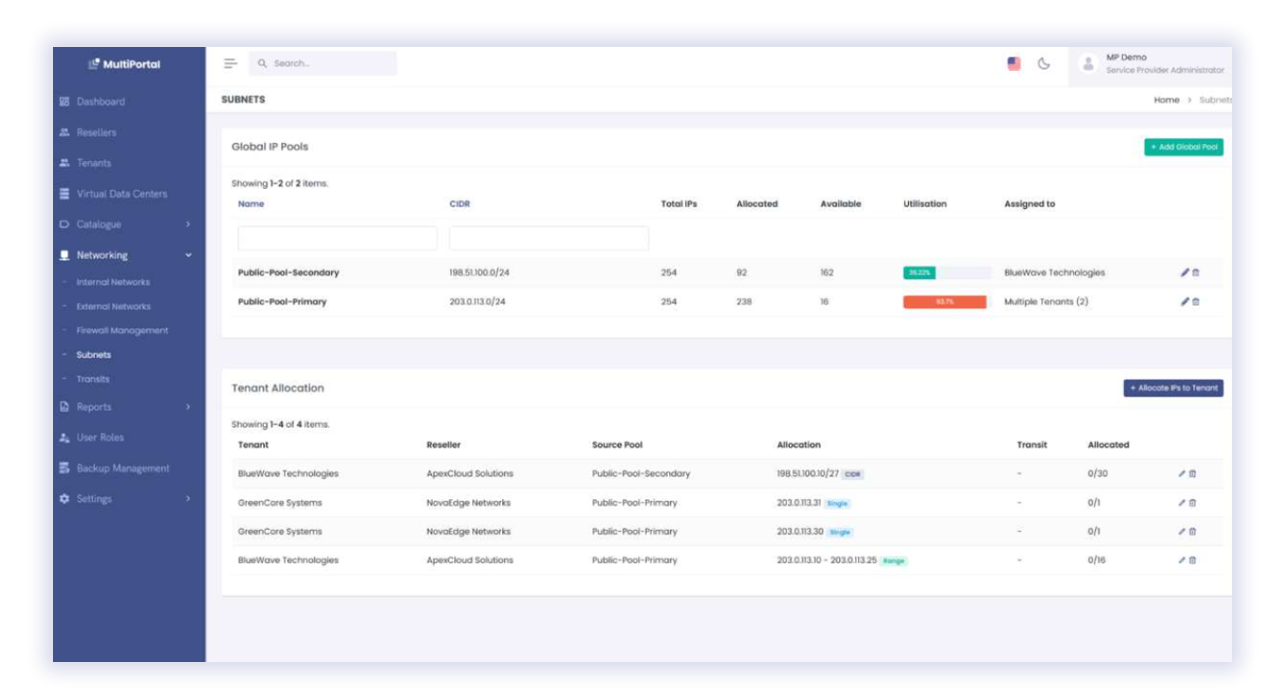
From this page a Service Provider can see their Public IP Pools for application and tenant created Subnets.

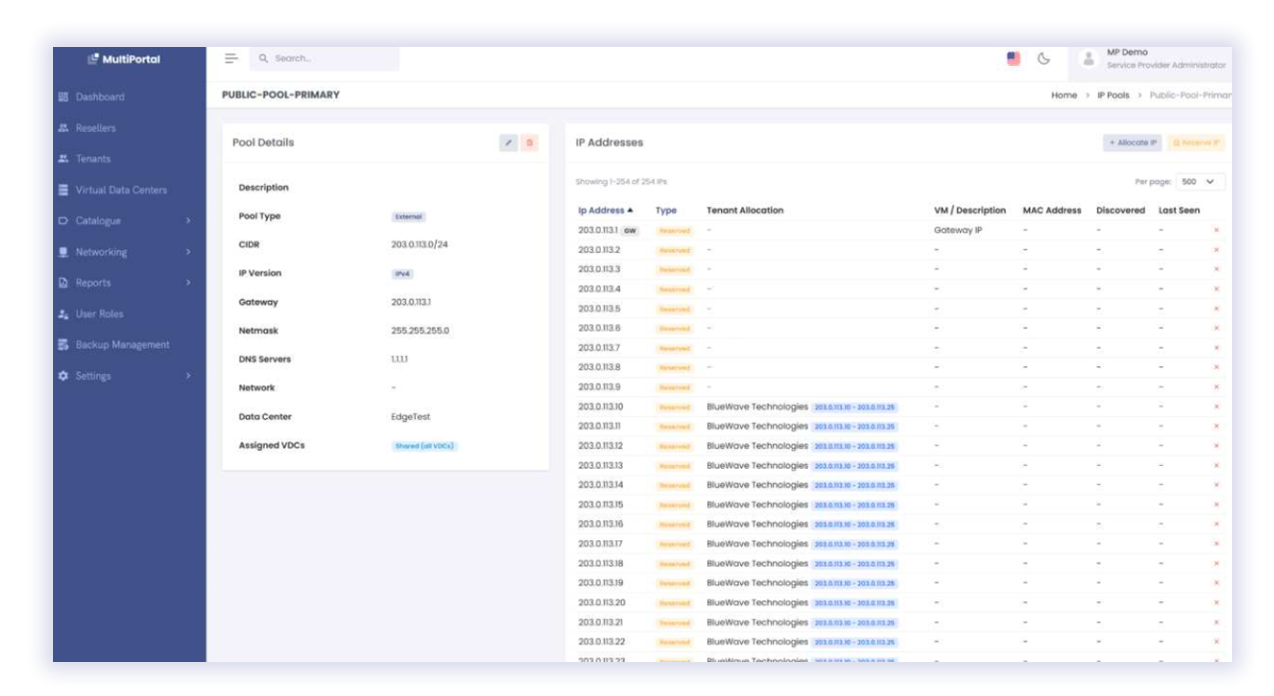
Here we can see the early UI of our subnets functionality, showing a range of reserved public IP addresses assigned to a Reseller / Tenant.

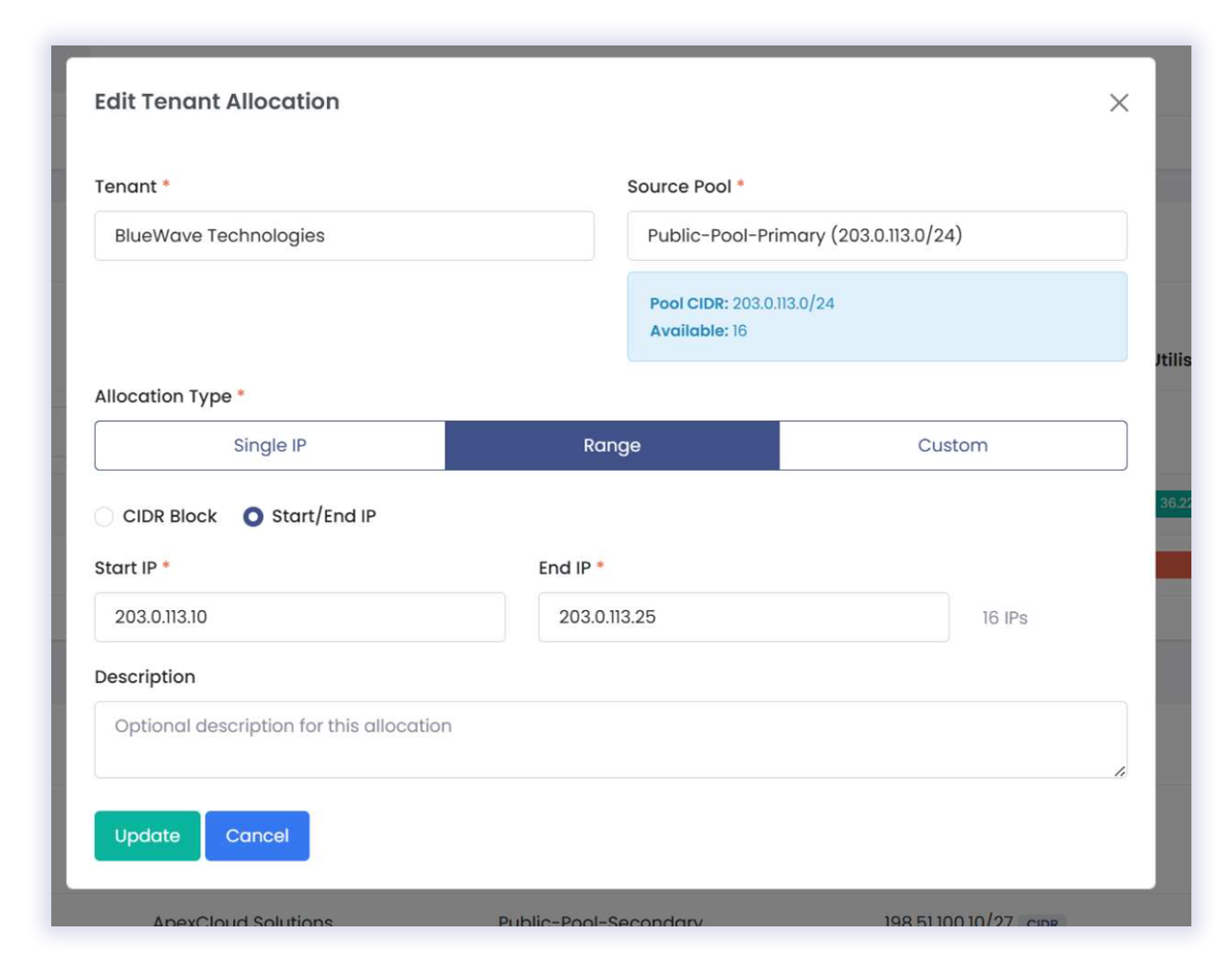
Here a Service Provider can assign a single IP, a range etc from a subnet – in this case a public IP range.

MultiPortal 1.4: Transit Edges & Edge Manager

This is the one we’re most excited about. Version 1.4 brings virtual routing directly into MultiPortal.

Transit Edges

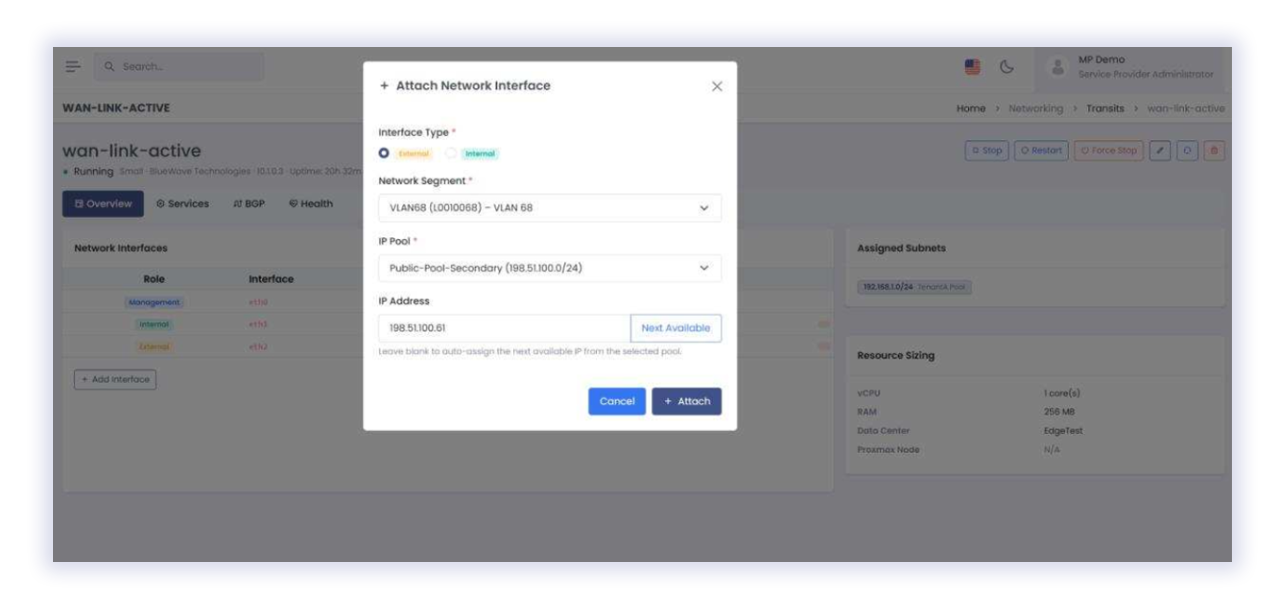
Service providers or tenants can deploy their own Transit Edges (essentially virtual routers) right from the UI. Service providers build the templates and size them to fit the customer. A small tenant might get a lightweight router with 256MB RAM and a single vCPU. A larger customer? Spin up something with 16GB of RAM and eight vCPUs. You decide what makes sense, and usage is fully trackable through our reporting and API.
 

From a tenant’s perspective, they get self-service control over NAT rules, firewall rules, DHCP configuration, VPN setup, and in future, load balancing. All managed from within the MultiPortal UI. No need for a separate router per tenant, streamlining the overall experience for service providers and tenants alike.

Edge Manager

Behind the scenes, our new Edge Manager handles the full lifecycle of every virtual router. It securely manages running configurations with full version control, so you can track every change and roll back if needed.


Because the running config is saved within our network management layer, virtual routers can be redeployed at the click of a button. Something breaks? Redeploy. Need to migrate? Redeploy. Simple.

A New Revenue Stream

Transit Edges are included in your MultiPortal license, but they’re a feature your tenants will happily pay for. Virtual routing, self-service network management, NAT, firewall, VPN —that’s real value you can package and bill for. All usage is tracked through the API, making billing integration straightforward.

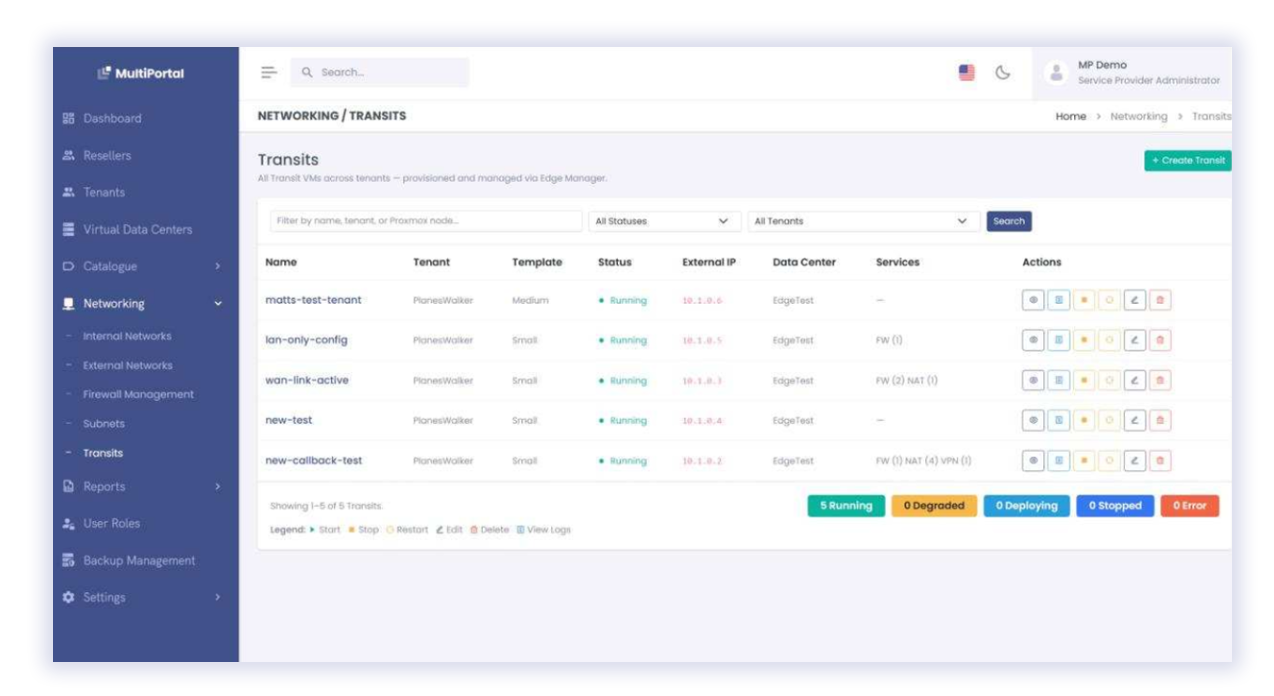
From this page a Service Provider can see and manage all Transit Edges and see the
services that each is running, and their overall status.

Here we can see a Service Provider attaching a Network Interface to a Transit Edge along with a mapping to a Public IP pool / address.

What's Next

We’re working hard to get 1.2 out the door, with 1.3 and 1.4 following close behind. We’ll share more detailed release timelines as we get closer, along with deep-dive posts on IPAM, Transit Edges, and Edge Manager.


As always, each release will go through a release candidate stage before going stable. Service providers are welcome to jump in during RC, test the new functionality, and share feedback. Your input directly shapes what ships.


Got questions? Want to see any of this in action? Book a demo— we’d love to walk you through it.

Related Articles

[HOTFIX] MultiPortal 0.8.1 – Bug Fixes & Improvements

We’ve just rolled out a hotfix to address several issues some of our beta users raised and improve the overall experience. However, in the previous release, 0.8.0, we added some extra security checks to utilise the console, this broke the internal update function from within MultiPortal. This means you must run the update manually from […]

Published On: November 21, 2024 | Categories:  Updates

Major MultiPortal Update: New Standard & Premium Plans Launching July 2025

We’re excited to share some important updates from the team at MultiPortal. Over the past few months, we’ve been scaling fast, growing our user base, expanding our platform, and delivering the features our community has been asking for. Now, we’re rolling out our most significant release yet, and we want you to be the first […]

Published On: June 17, 2025 | Categories:  Updates

[HOTFIX] MultiPortal 0.6.1 Release – Bug Fixes & Improvements

We just rolled out a hotfix for MultiPortal (version 0.6.1), which addresses several bugs and introduces some improvements to enhance your experience. Here’s what’s new:   New Features   Update Notification: Added notifications for when new releases are available System Configuration Page: Added a new page to display system variables crucial for MultiPortal’s functionality Bug […]

Published On: October 11, 2024 | Categories:  Updates